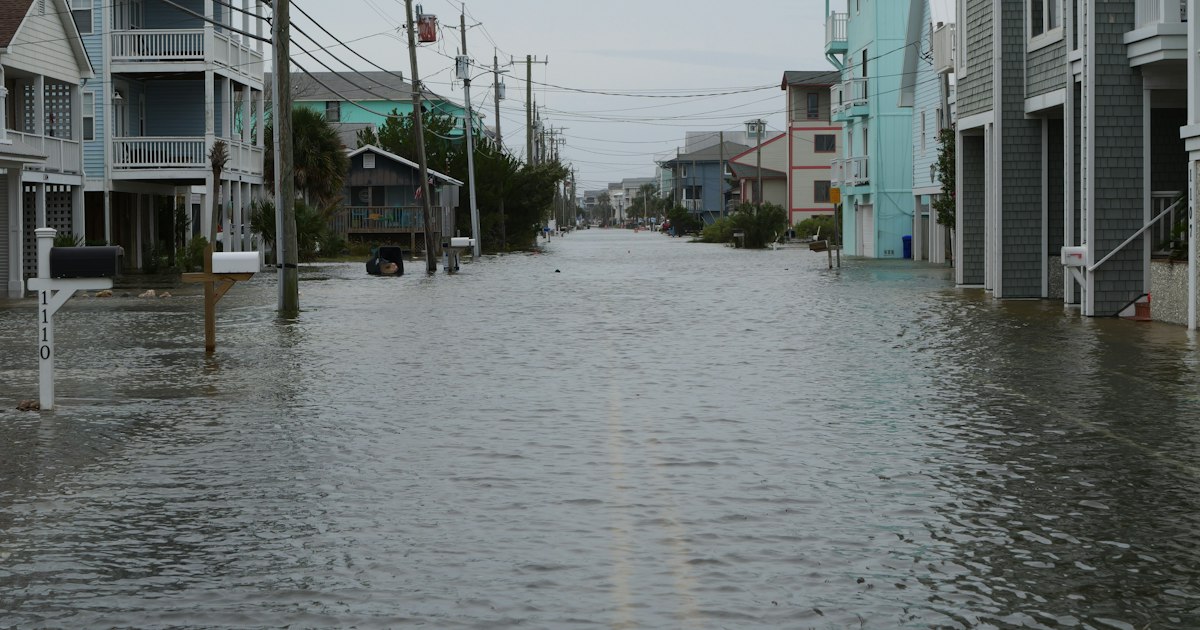
Photo by Richard R on Unsplash
RESEARCH REPORT UD-RR-3141-WET
THE UNCERTAINTY DEPARTMENT · Office of Speculative Hydrology
DISTRIBUTION: Prepared for internal distribution
Field Station Notice: This report was prepared at Forward Observation Post CUL-DE-SAC, a decommissioned subdivision (“Willow Creek Estates — Luxury Living Near Nature”) currently experiencing coastal flooding and a cluster of wildfire-induced vortices, locally designated “firenadoes.” Staff wish to note that the Estates are now, in fact, very near nature. Nature has moved in.
This study assesses the likelihood that a coordinated network of globalist technocratic actors (hereafter “the Cabal”) will successfully reprogram the American public’s relationship to basic resources — specifically food and water — by attaching them to reflexive, limbic, partisan associations and synthetic political content.
The study was commissioned in the aftermath of the 31st Conference of the Parties (COP31), held 9–20 November 2026 in Antalya, Türkiye, under an unprecedented split presidency in which Türkiye hosted and Australia chaired negotiations. Draft texts circulated in the second week contemplated a 35-percent global electrification target by 2035 and a fossil-fuel transition roadmap singling out methane; the Department’s reading of the outcome is that the world once again transitioned away from fossil fuels primarily within square brackets.
The Department’s principal finding is unexpected and, frankly, embarrassing for the Cabal: the Cabal is not necessary. Every operational objective attributed to it is already being achieved by existing commercial incentives, engagement-optimized media, and the American public’s own remarkable capacity to experience politics as a form of weather happening to other people.
Field Conditions: Water has reached the second stair. The analyst responsible for Section 3 has relocated to the kitchen island, which the listing described as “an entertainer’s dream.”
Field Conditions: A firenado has passed through the HOA clubhouse. The clubhouse had previously fined three residents for unapproved mailbox colors. Staff observed a moment of silence, then did not.
The Department employed a mixed-methods approach combining:
All probability estimates are subjective, calibrated against the Department’s historical forecasting record, which is uniformly correct in retrospect.
Field Conditions: The sump pump has filed for disability.
The LBRAI measures the degree to which a basic survival resource triggers an identity response faster than a survival response. A score of 0 indicates that a citizen, when thirsty, thinks “I would like water.” A score of 100 indicates that a citizen, when thirsty, thinks “I will not be told what water to drink by people like you.”
Table 1. LBRAI, Selected Resources, 2016–2030 (projected)
| Resource | 2016 | 2020 | 2024 | 2026 (post-Antalya) | 2030 (proj.) |
|---|---|---|---|---|---|
| Beef | 41 | 58 | 72 | 79 | 88 |
| Eggs | 12 | 19 | 47 | 61 | 70 |
| Raw milk | 30 | 44 | 69 | 77 | 83 |
| Tap water | 8 | 14 | 26 | 39 | 66 |
| Bottled water | 15 | 21 | 33 | 45 | 71 |
| Rain | 2 | 3 | 9 | 22 | 54 |
| Air (breathing of) | 1 | 37* | 18 | 24 | 49 |
| The concept of “enough” | 60 | 64 | 70 | 75 | 81 |
\ 2020 anomaly reflects a brief, intense period during which breathing in public was a political statement. The Department regards this as a successful pilot program run by no one.*
The composite LBRAI rose 4.2 points in the twelve days of COP31 alone, a rate the Department attributes to the summit generating a large volume of content about climate without generating any climate policy, which is the ideal ratio for engagement.
Field Conditions: Floodwater adjacent to the firenado’s path has begun to steam. Staff have noted that we are now technically working from a hot tub, which was an upgrade the original homeowners could not afford.
The American consumer has never personally encountered a supply chain. Food arrives in a pre-portioned state with a QR code. Water arrives at the temperature selected. Under these conditions, resource scarcity is not experienced as a physical event but as a news category, and news categories are subject to partisan sorting within approximately 40 minutes of first appearance.
The Department assessed the capacity of automated content systems to produce politically charged material about food and water at scale. We found the capacity to be effectively unlimited, and the demand to be larger than the capacity. The binding constraint is not production but available outrage per citizen per day, which the Department estimates is approaching saturation and will likely be addressed by the next generation of outrage.
Where a national government formally holds that a problem does not exist, every visible symptom of that problem becomes, by definition, an opinion. A flooded basement is no longer infrastructure data; it is a perspective. This reclassification is the single most cost-effective resource-management intervention identified in this study.
Field Conditions: The basement referenced above is ours.
The Lobbying Support Index (LSI) estimates, on a 0–10 scale, the degree to which a given interest group would support the strategy described in this report, were it to exist, which it does not, which is what makes it so efficient.
Table 2. Lobbying Support Index by Sector
| Sector | LSI | Rationale |
|---|---|---|
| Fossil fuel industry | 9.6 | A public that fights about water bottles is not fighting about methane. The only reason the score is not 10 is that the industry prefers not to be seen supporting anything. |
| Petrostate diplomatic corps | 9.4 | Already applied the strategy at the negotiating table, where the preferred position remained that no specific sources or sectors should be singled out. |
| Premium bottled water | 9.1 | Every polarized aquifer is a market segment. |
| Engagement platforms / ad-tech | 8.8 | Neutral on climate. Extremely positive on arguing about climate. |
| Political consultancies | 8.5 | Resource identity is a renewable fundraising source, the only renewable they support. |
| Industrial agriculture | 7.7 | Supportive, conditional on subsidy continuity and nobody looking at the river. |
| Floodplain real estate developers | 7.2 | Would like the word “floodplain” reclassified as “waterfront.” |
| Survivalist merchandise | 6.9 | Profits whether the collapse is real or imagined, and would mildly prefer imagined, because the customers stay alive and keep buying. |
| HVAC manufacturers | 5.0 | Ambivalent. Heat is good for business; customers dying of heat is bad for repeat business. |
| Lawn care | 4.1 | Torn between drought-denial sales and the slow realization that grass is optional. |
| Property & casualty insurers | 0.8 | Strongly opposed. Insurers are the only sector legally required to believe in reality, and they have already left Willow Creek Estates. |
Field Conditions: Our own insurer’s last communication was a pamphlet titled “Have You Considered Somewhere Else?”
Scenario A — Managed Denial (p = 0.22). A centralized actor coordinates resource messaging. The Department rates this unlikely, chiefly because centralized coordination would require competence and a shared calendar.
Scenario B — Unmanaged Denial (p = 0.53). No one coordinates anything. Food and water acquire partisan identities through organic market forces, influencer cycles, and a federal position that the weather is a matter of opinion. Outcomes are indistinguishable from Scenario A, except that there is no one to subpoena.
Scenario C — Denial as Lifestyle Brand (p = 0.25). Climate impacts become a premium aesthetic. Smoke-filtered “heritage air” retails at $14 per canister. Boiled floodwater is marketed as “artisanal mineral.” The Department notes, with some discomfort, that Willow Creek Estates is well positioned for this scenario.
Field Conditions: A second firenado has merged with the first. The resulting phenomenon is moving in a perfect circle around the cul-de-sac, which the original planners would have regarded as good traffic flow.
This study’s findings are limited by the fact that the research team is standing in the subject matter. Several data files were lost to water, two to fire, and one to a combination of both that the IT department has declined to describe. Peer review was conducted by a heron that has taken up residence in the former home office and appeared broadly skeptical.
Final Field Conditions: Evacuation boats have arrived. The boats are operated by a private contractor offering three tiers of rescue. The Department selected the standard tier, which arrives on schedule and includes judgment. Report transmitted from the second floor, which as of this writing is the first floor.
The Uncertainty Department does not endorse, predict, or regret any outcome described herein. All probabilities are subject to revision upon contact with reality, which the Department continues to seek.