Photo by Jonathan Lim on Unsplash
RESEARCH BRIEF UD-RB-0000
PREPARED FOR: The Office of Strategic Ennui, The Uncertainty Department
This brief has not been peer reviewed. It has been peer glanced at, by peers who were on a smoke break and said “sure.”
Traditional deterrence assumes states fight over things: territory, resources, ports with good names. Our review of the historical record (two books and a documentary that was on at the hotel) suggests that many HPP conflicts are actually fought over positions: a stance taken against whichever great power is currently being great.
The distinction matters. A material dispute (a border, a river, a pipeline) can in principle be settled, because both sides want the thing. A positional dispute (recognition, prestige, standing against a hegemon) cannot, because the relevant ministries have developed an institutional interest in its continuation. DNLZ does not address material disputes, which remain the responsibility of surveyors. It addresses only the second kind, which our sample suggests accounts for most of the noise.
The pattern runs in four stages:
At no stage does anyone want the war. They want the posture, and war is just the posture’s most expensive accessory.
DNLZ keeps the 1914 alliance system’s capacity for universal obligation while removing its most historically unfortunate feature: the expectation that obligations must eventually be discharged. The mechanisms are as follows.
Every participant is allied with every other participant, in writing, several times, in different languages, with clauses that partly contradict each other. Treaties must be kept secret from the public and from at least one of the signatories, as was customary.
“An attack on one is an attack on all, which is unfortunate for the attacker, who is also all.”
A state that tries to start a war finds that it is now obliged to help its target, its target’s allies (itself), and its own allies (also itself) resist its own aggression. Field tests indicate the aggressor usually issues a strongly worded note to itself and goes to lunch.
DNLZ keeps the 1914 railway timetables in full working order but locks them at the stage marked “under consideration.” Generals may draw arrows on maps. The arrows must be in pencil. Every arrow ends at a café.
Participants may still issue ultimatums, which preserves national dignity. Ultimatums are traded on a central exchange and expire in 48 hours unless renewed, the way a parking permit does. Nobody has to back down, because no ultimatum is ever answered. They are filed.
Each participant gets a fixed annual allotment of grievances, ceremonial snubs, and recalled ambassadors, to be spent as it sees fit. Unused grievances roll over. Recalled ambassadors are sent to the same hotel, where they reportedly get along fine.
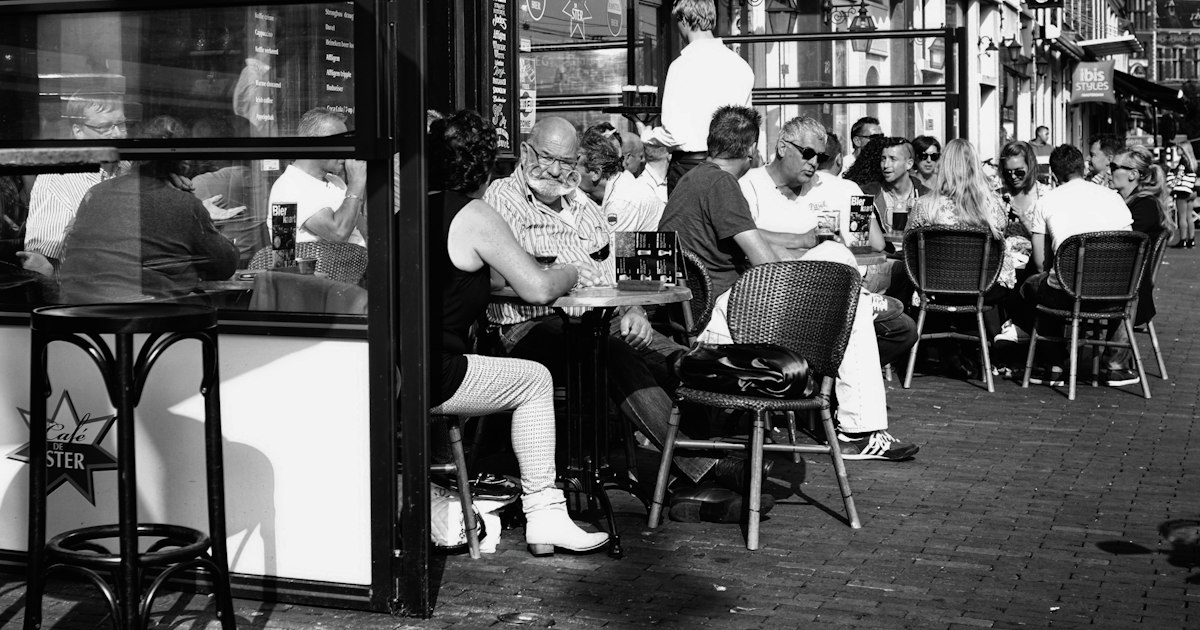
Everyone outside the diplomatic class belongs to the Reserve Aesthetic Component (RAC). The RAC does not take part in posturing. It is bored, it is halfway through a crossword, and it is waiting, with visible impatience, to get back to its hobbies.
By hobbies we mean leisure cultural production: amateur theatre, regional cheese, novels nobody finishes, bad jazz, five-a-side football, arguments about football, and anything else a population makes when no hegemon is watching. None of it takes a position on the world order.
When the hobbies are interrupted, the process is gradual. A population’s cultural life is absorbed into the national posture, one festival at a time, until the only hobby left is the grievance. A ministry is what grows in the space where the hobby should have been.
We see the RAC as the alliance’s center of gravity, for two reasons:
We recommend that RAC cigarette consumption be tracked as the alliance’s main readiness indicator, Cigarettes Per Ultimatum (CPU). A rising CPU means diplomacy is going on far too long, and is therefore working.
| Risk | Likelihood | Mitigation |
|---|---|---|
| A participant actually reads the treaties | Low | Treaties are long and partly in Latin |
| An archduke is shot | Moderate | All archdukes are reclassified as “honorary” and kept indoors |
| A real hegemon notices and asks what this is | High | Tell it that it is also an ally, under clause 14(b), which it will not read |
| The RAC runs out of cigarettes | Severe, statistically speaking | Strategic Tobacco Reserve, held in a pleasant cellar in a neutral country |
| The RAC resumes its hobbies, and every one of them is about the diplomats | Accepted | Classified as cultural output |
| Participants enjoy posturing too much to stop | Certain | This is the design. The posturing continues; it just stops being load-bearing. |
DNLZ costs nothing, which is suspicious. All costs are existing costs, including new ones. The main one is the upkeep of mutually contradictory obligations, which existing foreign ministries already maintain at considerably greater cost. DNLZ simply asks them to keep doing it on purpose. To keep the program credible, we also recommend a modest line item for stationery, wax seals, and one (1) commemorative brass band that rehearses but never performs.
The Uncertainty Department is a nonprofit, nonpartisan, nonserious institution. Its findings reflect the views of whoever was in the room at the time. No archdukes were harmed in the preparation of this brief.